

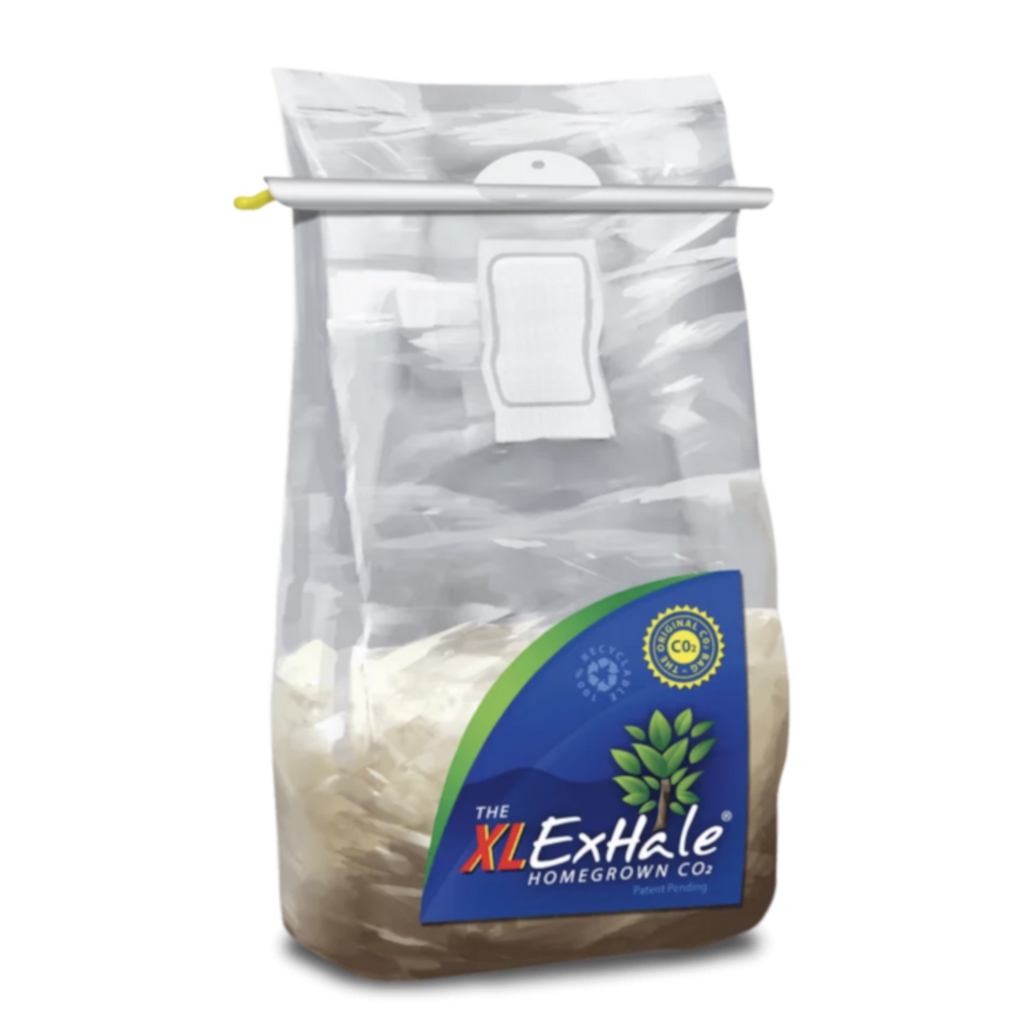
Product features:
Breathable patch:
- The bag's ventilation valve.
- A microporous breathable patch lets carbon dioxide out of the bag while keeping contaminants out.
Durable plastic:
- Made from durable, puncture-resistant plastic.
Special substrate:
- The substrate is a proprietary recipe designed to feed the CO2-producing mycelium for long-term production.
High CO2-producing mycelium:
- The mycelium is a patented strain that produces no fruit but plenty of carbon dioxide, supporting growth in an indoor garden and mimicking a natural environment.
Product benefits:
- ExHale bags provide a continuous supply of fresh carbon dioxide for six months.
- Supports higher yields.
- Powered by patented genetics and designed for optimal performance.
- No maintenance needed.
- Proudly made in the USA.
- Uses no electricity, keeping energy costs low.
- Produces no heat, so it does not affect the temperature of your grow space.
ExHale bags are a reliable choice for effective CO2 supplementation in indoor cultivation.
Instructions: slide the hanger of the CO2 bag from below the filter back up above the filter, then hang the bag at a suitable height above the plants.
FAQ
Why is CO2 important?
Photosynthesis is the process by which a plant's leaves produce carbohydrates. Sunlight, CO2 and water are converted into carbohydrates and O2 by the chlorophyll in the plant's chloroplasts. Plants grown indoors under artificial light often lack enough CO2 for efficient photosynthesis. When plants can make the most of photosynthesis, the result is bigger plants and bigger yields.
How large a space can The ExHale cover?
The ExHale is designed for small to medium grow spaces and provides enough carbon dioxide for 4-6 plants. Larger spaces need more bags, but the effect is the same.
Do I need to switch it on?
The only bag that needs activating is the ExHale 365 bag. Remove the hanging hook and move the mycelium mass onto the substrate. In about two weeks the bag reaches its full CO2 capacity.
Where should The ExHale bag go in my tent or greenhouse?
As carbon dioxide is heavier than air, hang the bag 30-60 cm directly above the plants. Each bag comes with a hanger, and how you attach it is up to you. When the bag is hung, a continuous stream of CO2 falls directly onto the plants, the most effective way to supply them with carbon dioxide 24 hours a day for up to six months.
Will my bag grow mushrooms? It is a "mushroom bag", after all.
The ExHale bag is a mushroom bag that does not produce mushrooms. It contains a single mass of mycelium, with no formation of traditional mushrooms.
The ExHale strain was developed for CO2 production. Other products claim to produce CO2, and while they do, they are in fact strains intended for food production.
Does CO2 help with cuttings and rooting?
The effect of carbon dioxide on root processes is often underestimated and little studied. With added CO2, roots in many plant species have been observed to multiply and grow longer, thicker and faster. When cloning, root growth has been seen to start 3-5 days earlier in a CO2-enriched environment than without it. While much remains to be learned about how roots respond to CO2 enrichment, plant roots, like other plant parts, generally do better in CO2-enriched air than in ambient air.
Does CO2 really increase yields, or does it just make a healthier plant?
Both. The aim of CO2 enrichment is to shorten the time from seedling to harvest, speed up growth and increase yields. Plants grown at higher CO2 levels are better able to resist insects and diseases, which makes them healthier. In one study, greenhouse lettuce grown without added CO2 was ready to harvest in 59 days, while lettuce given added CO2 was ready in 48 days, and by weight the CO2-enriched lettuce weighed 30% more. In the manufacturer's own trials, tomato plants given more CO2 produced 20% more fruit than plants without it, and by harvest weight 25% more.
Tests with strawberries found that strawberries grown at high CO2 levels contained more sugar and physical mass, supporting a greater number of flowering sites. This led to more strawberries and a larger total yield.
Can there be too much CO2?
Too much carbon dioxide can harm plants. When CO2 levels get too high, the plant's ability to transpire during photosynthesis decreases. With lower transpiration, fewer nutrients move through the plant, so growth slows. High CO2 levels can also cause spots on the leaves; this dead tissue invites bacteria and mould, which can damage plants, reduce yields and in some cases ruin the crop. CO2 levels of around 1200-1500 ppm have been shown to give optimal growth. Above this, CO2 is simply wasted and can cause problems.

Products you just showered with attention
